
Windows Security Vs. Third-Party Software: Defender, Kaspersky, Or Norton? Designing A Cohesive Digital Defense Strategy
The choice of relying on Windows Security (Defender) as built into Windows Security (Defender) or investing in a third-party software such as Kaspersky Premium or Norton 360 is no longer a simple comparison of antivirus engines. It is all about managing your digital world, from your operating systems license to your productivity programs. This decision will have a direct impact on other crucial decisions. Right security strategies ensure harmony across your software collection, while a wrong strategy can cause critical gaps and conflicts. This guide explores the Ten most crucial, but often ignored aspects that connect your security choice directly to your licensing strategy and the way you manage your system.
1. Defender’s Deep OS Integration: Your primary firewall is to make sure that you’re licensed.
Windows Security (Defender) is not a separate program It is a central, integrated component of a genuine Windows 11 installation. Its efficiency and reliability is integrally linked to the validity of the Windows 11 lizenz. Defender’s threat technology or update mechanism if Windows was activated with a non-official windows 10 home key purchased from a grey-market site which offers Windows 11. Microsoft might disable or decrease services for non-original versions. The first step to ensuring security is to ensure that your OS is genuine and correctly connected digitally to the hardware.
2. Windows 7 Mindset Vulnerability.
People who are upgrading from Windows 7 carry a dangerous belief that third-party antivirus is an absolute requirement. When it was the Windows 7 era, this was true. In the present, Windows 11’s Defender is a top-of-the-line, cloud-backed security product. If you are accustomed to installing Norton 360 or something similar to it on Windows 11 computers, resource conflicts could arise, since they both fight for low levels of system control. It is recommended that you first evaluate Defender’s performance. It might be adequate and save you money on subscriptions and system overhead, provided that your Windows license and the system updates are completely valid and up-to-date.
3. Bloatware, OEM System Nuances, and Conflicts.
New PCs, specifically ones with pre-installed Windows 11 OEM’ license often come with trialware for third-party security suites. This creates an immediate conflict situation. You should completely remove one security program before activating another. A clear OEM system must have these trials removed entirely before you can even decide whether to use Defender or install a preferred security suite such as kaspersky premium. Failure to do this can cause system instability, massive performance drop, and leave both solutions partially disabled.
4. Kaspersky Premium and the Architecture of Control.
Kaspersky premium is the top-tier of third-party security suites. It provides granular control on security, privacy, and monitoring of networks. This software is particularly useful in environments with a lot of complexity. A security console that is unified (often different from Kaspersky’s consumer products) such as, for instance, is essential if you are running a network that uses a”windows Server 2025″ to store files or perform backups. Kaspersky’s deep technical control is integrated into the Windows 11 Pro environment which allows local policies to be adjusted to enhance security capabilities and reduce interruptions for power users.
5. Norton 360 as an Ecosystem Play: Beyond the Mere Antivirus.
Norton 360 has evolved from a security program to become an entire digital ecosystem. The value proposition of Norton 360 is cloud backup, integrated VPN and dark web monitoring. It’s an excellent choice for people who are a bit disorganized in their software strategy, such as people who have a standalone office lizenz buy (perpetual), but no Microsoft 365 subscription. Norton can make up any gaps (backups as well as privacy) that Microsoft’s integrated ecosystem (OneDrive Defender Edge protections).
6. The Interplay between Office Licensing, Macro Security and Office Licensing.
Your productivity software can be an important attack point. Defender and third-party software suites can be used to scan documents and macros regardless of whether you have an officelizenz perpetual license or subscription. However, third-party suites usually offer more user-friendly and granular controls to manage Office macros and application hardening behavior. Kaspersky Premium offers more manageable and transparent controls for complex Office documents, especially when your workflow is heavily dependent on sources external to Office documents. This is a safer approach as opposed to Defender’s automated, opaque approach.
7. Business Security Divide: CALs and Centralized Management.
Security conversation is completely different in environments that use windows 2025 or require Cals. Windows 11 Pro with Defender is managed centrally through Microsoft Defender Endpoint and Intune. Third-party software requires their own management consoles and licensing. The decision to choose a third-party solution no longer boils down to which security system has a higher detection rate, but instead which one is most integrated into your existing IT infrastructure. The administrative expenses of a disconnected IT security system are often greater for a business than any marginal gain in detection rates.
8. Resource Consumption vs. System Licensing Tier.
A common myth is that Defender is “lighter” than other third-party suites. When properly configured, a modern-day suite like Norton 360, or Kaspersky Premium will be highly optimized. In most cases it is the Windows integrity and system license are what determine the performance. Any security solution is unable to function on an infected system, which is characterized by outdated drivers and software as well as a grey market OS key, or the grey market OS key. Windows 11 Professional or Home lizenz, as well as an uncluttered, stable system, provides the most stable base for Defender as well as third-party security software.
9. The Update Dependency is a Single Point of Fault
Security software is only as effective as its most recent update. Defender’s update mechanism is tied directly to the Windows Update service. This chain can be broken if Windows is damaged, or the license you purchased is ineligible. Third-party programs maintain their own update channels. This is a benefit in the event of a system being unstable. But it adds yet another background process. You may choose based on the level of confidence you are able to have in your Windows installation.
10. Establishing an Coherent Strategy for Defense-in-Depth.
The goal is to build a coherent defense, without the need for overlap. Windows Defender will be the foundation of a well-integrated defense for an Windows 11 Retail License holder or the Microsoft 365 Office subscription holder and a OneDrive user. The addition of a complete third-party suite is usually redundant. Conversely, a user with a mix of software (e.g., Windows 11, Google Chrome, standalone Office) could benefit from the all-encompassing security that is independent of browsers and the digital privacy tools of a suite like Norton 360. Your choice of security must be logically based on your overall software and licensing that will result in a single security system that is integrated instead of a set of overlapping, conflicting or incompatible security tools. View the best windows 11 oem for more advice including office 2016 software, microsoft office with key, windows server software, office 2016, office 365 office key, office 2019, office key, windows server 2016, microsoft office software key, windows server 2016 and more.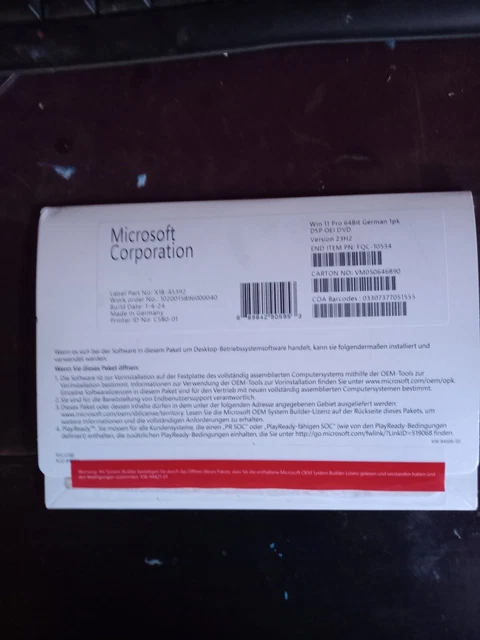
The Real Cost Of Software – Why Windows Licences & Antiviruses Save The User Money.
In the modern economy, the pursuit of short term savings on software could lead to a long-term financial crisis. The decision to purchase a cheap `windows 11 oemkey’ from a gray-market website or avoiding a reliable antivirus like `kaspersky premium` instead of investing in nothing is a fundamental misinterpretation risk and value. The true cost of software isn’t the cost of purchase, but its total Cost of ownership (TCO). This encapsulates the risk of data breaches, security breach loss, penalties for non-compliance and loss of productivity. For companies and users who are serious an authentic Windows 11 lizenz` and a security suite that is professional grade aren’t just expenses, they are critical infrastructure investments that have a quantifiable ROI in risk mitigation. This study reveals hidden costs centres that make the “cheap” cheap option, incredibly costly. The software connects OS licensing to productivity software and servers infrastructure.
1. The Grey Market License – It’s not an Asset!
Microsoft Windows 11 lizenz purchases from a seller who is not authorized creates liability. Microsoft will deactivate keys in large amounts if they violate Microsoft’s terms. They’re typically volume licenses or MSDNs. The immediate costs are unusable operating systems, but the true cost is the unbudgeted hours of IT work trying to recover data, as well as retail licenses purchased under pressure. The “savings” that are $30, on the first key is a tad less than this. A key from an OEM or Retail is an asset that is guaranteed throughout the lifetime of the hardware.
2. OS Integrity Determines Security Software Efficacy
Antivirus software such as “norton 360” or “kaspersky premium” run at the kernel level and need an operating system that has security core. Grey-market Windows installations usually utilize modified software or files to enable activation to bypass the validation process. These modifications are usually flagged as malicious. They could cause instability to your security suite or create backdoors. You purchase a premium security (kaspersky) and install them on the outside of a building where the architectural blueprints were given to criminals. The corruption of the foundation negates the security guard’s effectiveness.
3. Compliance & Audit Time Bombs A Time Bomb for business
If a company is using software that is not licensed, they are playing Russian roulette. If a company uses Windows server 2025 that has the correct cals but clients’ PCs are running grey market Windows versions An audit can result in an “true-up invoice” for the full retail price on every license that is not legitimate, as well as the possibility of penalties. This sudden, unplanned capital outlay can easily exceed tens of thousands of dollars, far surpassing any savings. A valid license serves as an insurance policy to protect you from financial shocks.
4. Data Loss – The Ultimate Cost Unbudgeted
Unpatched vulnerabilities represent the primary route through which ransomware, malware and other threats that take information can be spread. Windows Updates may be delayed or even broken in non-authentic Windows installation. Systems are vulnerable if they do not receive regularly scheduled security updates. The cost of a single ransomware attack, which comprises the ransom fee (with no guarantee that it will be paid) as well as the cost of investigational IT services, and the loss of data along with the interruption to business, can put a small firm into bankruptcy. The monthly cost of an Windows 11 Pro legitimate license and an antivirus subscription in the top level is a joke in comparison to this risk.
5. Productivity Suite Stability on a Fake Basis
Installing a genuine office lizenz on a nongenuine Windows installation, whether it’s an ongoing office lizenz purchase or an Microsoft 365 subcription, is similar to building a house with fastsand. Office’s update and activation are directly tied to the Microsoft ecosystem. Windows that has been deactivated may prevent Office from activating, leading to a reduced number of functional banners. It may also cause cloud sync problems and crashes. A system that is designed to fail could ruin the investment you make in productivity tools. Stable productivity is dependent on a legal, stable OS.
6. The IT labor multiplier in a fragmented, unofficial stack.
The management of a PC network with various grey-market keys, mixed antivirus solutions, and no centralized management can be a nightmare for IT. Each problem, which is not supported, is hard to diagnose and distinct. Consider a fleet that has legitimate Windows 11 Pro licenses, controlled through Intune (included in Microsoft 365 Business) and a centrally managed security console. The latter decreases mean time-to-repair (MTTR) issues by orders of size. Software licenses costing less can cause exponentially more costly continuing cost of labor.
7. The upgrade path is dead and its future costs
A gray-market windows11 home key` (or Pro key) offers no legitimate upgrade option. If you want to relocate hardware or want to integrate with the “windows Server 2025” system, you’ll have to purchase another license. The cost is typically higher. A valid Retail License is transferable. Microsoft 365 comes with continuous upgrade rights. The pricey key can trap you into a cycle of repurchasing, while the genuine option provides a simple affordable, cost-predictable option for the future, protecting your initial investment.
8. Performance Taxes of “Bargains” Software and Conflicts.
To activate grey market Windows software, illegal tools typically execute persistent background processes which consume RAM and CPU resources. This interferes with legitimate software and security tools. This “performance fee” slows down trading platforms, creative suites and development environments. The time lost to slower performance–compounded over months and years–represents a significant, hidden cost in lost human productivity. If you use a genuine and clean system you can be sure that your entire hardware is dedicated to your work.
9. Professional Reputation and Trust of Clients In decline
Unlicensed software poses a serious liability to a company. If a client or partner discovers your firm cuts corners in the use of software that is fundamental that is unlicensed, it will irreparably damage trust. It demonstrates that you are not concerned about security, legality, and operational integrity. In funding bids or during the process of due diligence to qualify to receive funding, it can be considered a disqualification. Costs can include lost contracts, loss of partners, and damaged brands, each of which is higher than software licensing fees.
10. The benefits of a comprehensive ecosystem over. the value of a collection of “savings”.
A comprehensive ecosystem is most efficient. Microsoft 365 Business Premium, for example, is a great option for companies. It includes Windows 11 Pro with upgrade rights, the newest Office applications, secure cloud storage that is 1TB, business email with advanced security and mobile management, and all of this at a predictable price per user. This will eliminate the gray market Windows hunt and standalone Office licenses and third-party antivirus because it has upgraded Defender. The TCO is transparent, manageable, and legally sound. The “savings”, resulting from the assembling of illegitimate elements, are a falsehood. It vanishes when you expose it to real-world consequences, including risk, labor expenses, and financial losses. Have a look at the recommended norton 360 for more advice including windows server software, microsoft 365 key, microsoft office 2019, windows and office, microsoft project, windows server 2019, microsoft visio, office 365 office key, windows office, microsoft office download and more.
20 GREAT IDEAS FOR SELECTING WINDOWS 11 OEM STORES
Filed under Uncategorized